Receive 24-hour pre-release access and buy at the early-bird rate when sales open.
*No spam - just Ticket & Event Updates
Seats are limited. Join the waitlist for first access when workshops drop
*No spam - just Ticket & Event Updates


With a foundation in architecture from MIT, I transitioned into software design, joining Revit Technology in 2000, which was later acquired by Autodesk. Over the next decade, I developed expertise in UX and product design, advancing Building Information Modeling (BIM) by working closely with thought leaders and users. My work laid the groundwork for modernizing how architects and engineers design and build.After Autodesk, I shifted to the construction sector, leading Product Management at Synchro Software (acquired by Bentley Systems). There, I modernized CRM and core products, evolving from desktop to SaaS and spearheading cutting-edge applications in desktop, mobile, VR, and HoloLens. I also expanded the platform's reach by integrating data with PowerBI.Now, in the iLab, I lead innovation and experimentation with emerging technologies, collaborating with developers, designers, and industry partners to craft breakthrough digital solutions. My focus is on empowering architects, engineers, planners, and builders to enhance design visualization, simulation, and collaboration, driving better performance, quality, and sustainable solutions for the built environment.I thrive on bringing fresh perspectives and rapidly synthesizing new insights to optimize processes and designs. My goal is to revolutionize the way we design and construct, making architecture smarter, more connected, and impactful.Specialties: UX Design, Innovation, Emerging Technologies, 3D Modeling, VR/AR, Team Leadership, and Product Strategy.
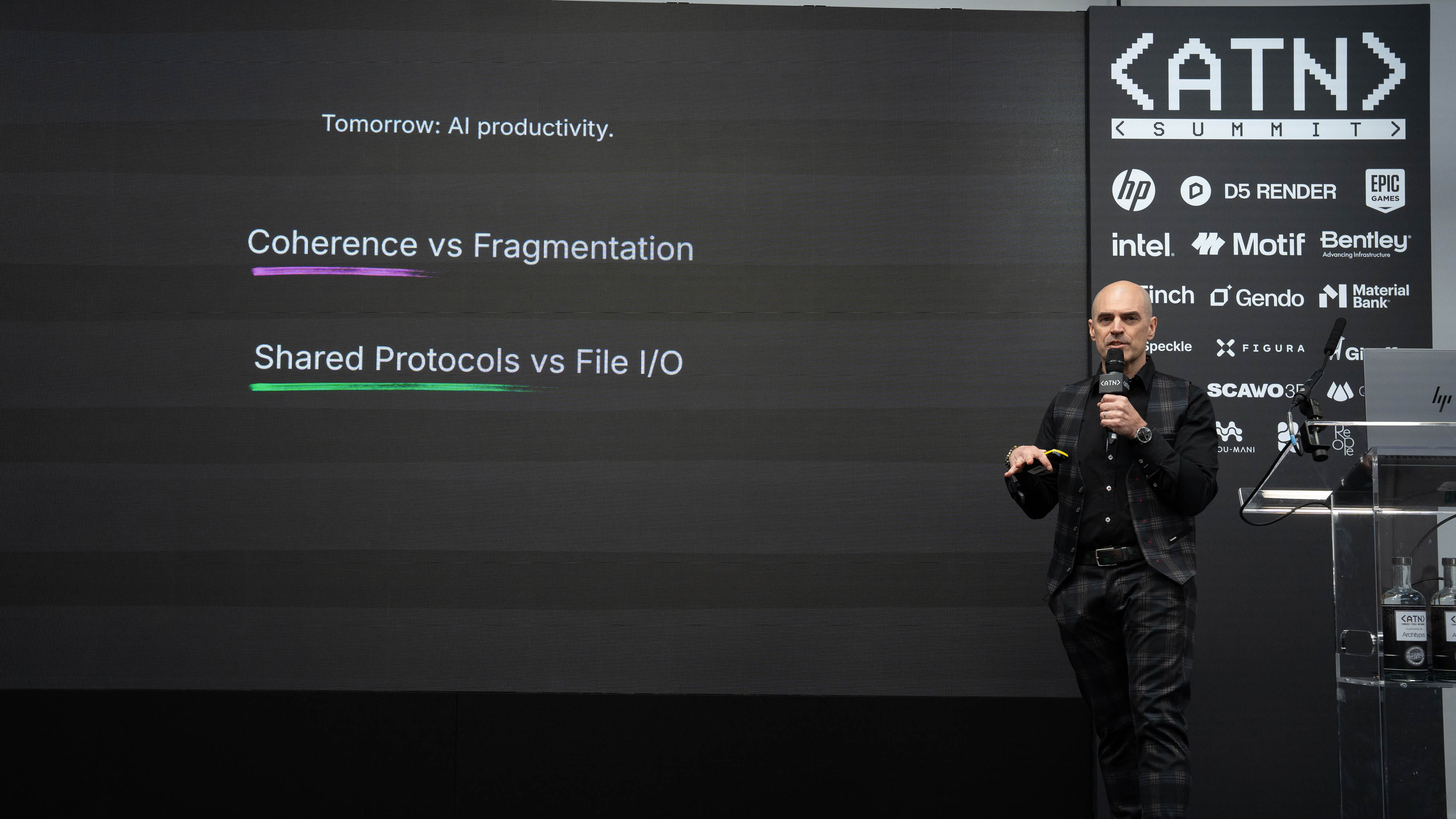
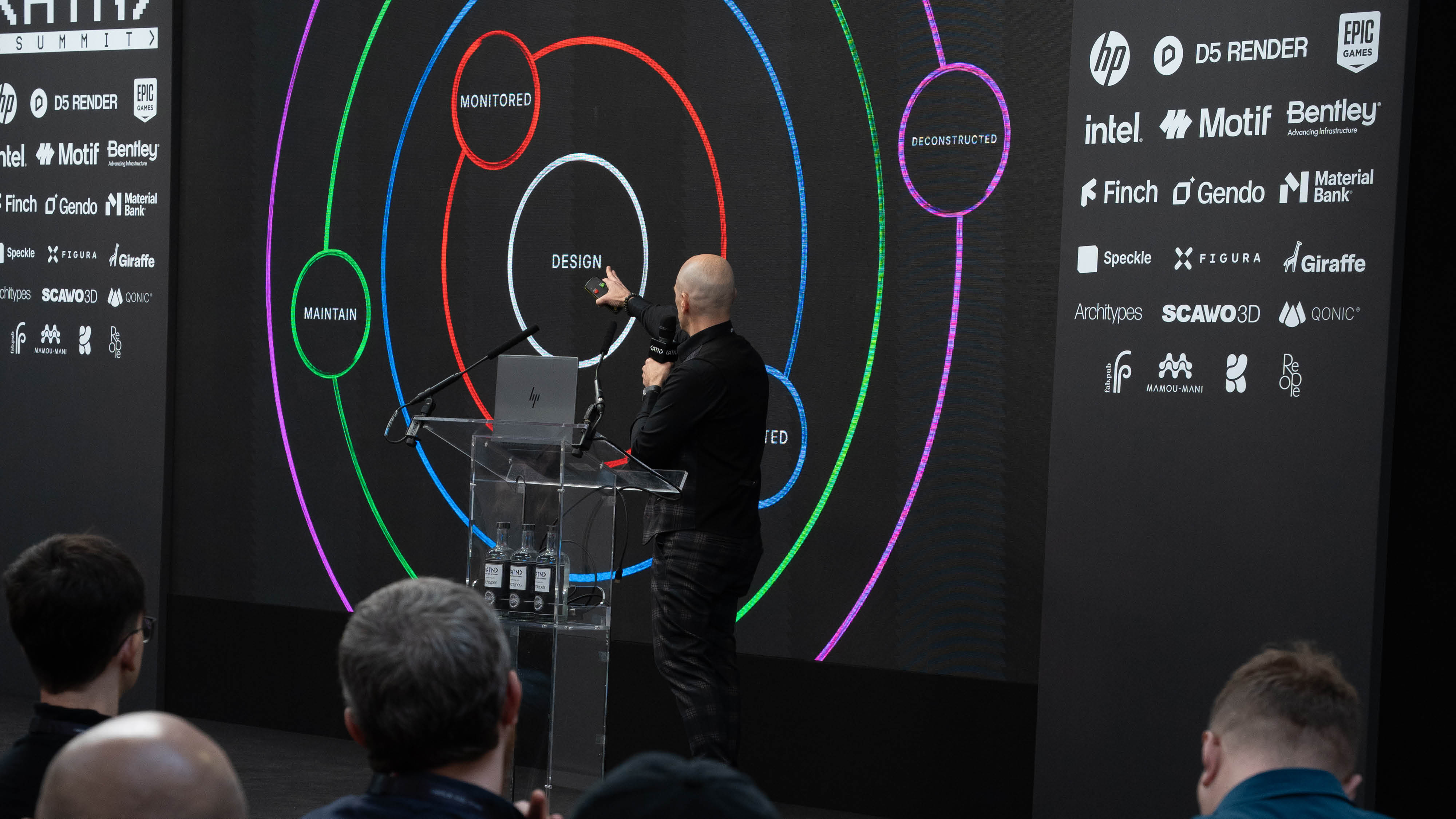
In this talk, Greg Bentley explores how the future of design and infrastructure depends not just on improving individual productivity, but on creating more coherent systems across the entire project lifecycle. Using the familiar London phrase “mind the gap” as a starting point, he reflects on the disconnects that still exist between design, construction, operations, and maintenance — and why those gaps continue to cost time, quality, and, in some cases, safety.
Drawing on examples from Bentley Systems’ work in digital twins, reality capture, XR, AI-assisted design, and infrastructure monitoring, Greg argues that the real opportunity of AI lies in enabling connected, context-aware workflows rather than isolated task automation. From language models generating geometry, to diffusion models powering visualisation, to physical AI supporting autonomous construction and live asset monitoring, the talk outlines a vision for infrastructure that can sense, adapt, and communicate across every stage of its lifecycle.
Rather than focusing on AI as a tool for individual efficiency alone, Greg presents a broader case for designing systems that are open, interoperable, and capable of carrying intent, data, and meaning forward without loss. The result is a compelling vision of a more responsive and intelligent built environment — one designed not around fragmentation, but around coherence.