Join the list for ATN x D5 competition updates, model access and submission launch.
*No spam – just ATN x D5 competition news.
Join the list for event news and ticket updates, including early-bird releases.
*No spam - just Ticket & Event Updates

00:00
/
00:00

%202.avif)


LMS Visual

China
The journey begins with the Great Cold, as the structure stands silently amidst the frost and rime of the Northern Frontier. It then transitions to the Awakening of Insects, where emerald duckweeds ripple across the lakes of Jiangnan, signaling a fresh rebirth. By Grain in Ear, the camera glides through the towering spruces and vast wilderness of the Tianshan Mountains. Finally, at the Autumn Equinox, the landscape is set aglow by the fiery cypress forests of the Lingnan region. While the scenery transforms through the cycle of the seasons, the architecture remains a constant observer. As the year turns, nature finds its heart within this sanctuary.


Martin Smékal
Czechia / Prague
I found out about the competition very late — but also at a perfect moment in my research into archviz tools. I’m planning to dive deeper into an archviz career after going freelance this September, building on my background in VFX, art direction, and previz. My primary tool is Unreal Engine, which has worked really well for archviz projects so far, but it does have downsides — mainly the lack of a ready-made, high-quality asset library and robust scattering tools.
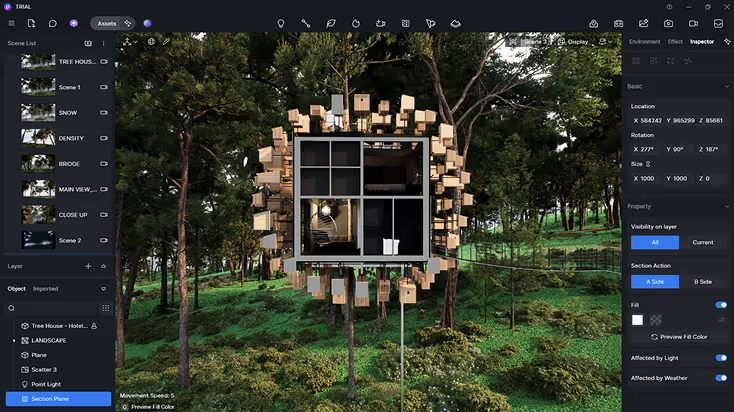
That’s when I discovered D5 Engine, and through it, the competition. I jumped straight into learning D5. What I love about it is how fast you can pick it up — it feels familiar because it’s essentially a game engine underneath. The assets and scatter tools are great, and unlike UE, you don’t have to constantly fiddle with the engine to keep it stable. You can get usable visuals very quickly, which is a huge plus.
My main critique is animation and timeline handling. It’s not very intuitive, feels hidden, and it’s easy to accidentally break things, so I ended up creating multiple projects just to stay safe. Keyframing is basic, and the lack of a curve editor is limiting. Still, I loved the experience and will definitely use D5 on an upcoming client project.
As for the short animation, it was a real pleasure to creatively work with an asset from BIG Architects. The more I thought about the “story,” the more I appreciated the Biosphere House concept — simple, beautiful, and deeply thoughtful. That’s where great architecture lives. Looking at the form, its purpose for birds, and its spaceship-like shape, I asked myself — why not make it fly? I didn’t want full sci-fi, so the flight happens in a dream, which helped justify it. The lighting turning the house into a giant light rig and placing it in different biomes naturally followed — and eventually led to space. Overkill, maybe, but I liked fully embracing the biosphere idea. Thanks so much for the competition and for partnering with BIG — I learned a lot.


Daniel de Freitas Rufino
Brazil / Londrina
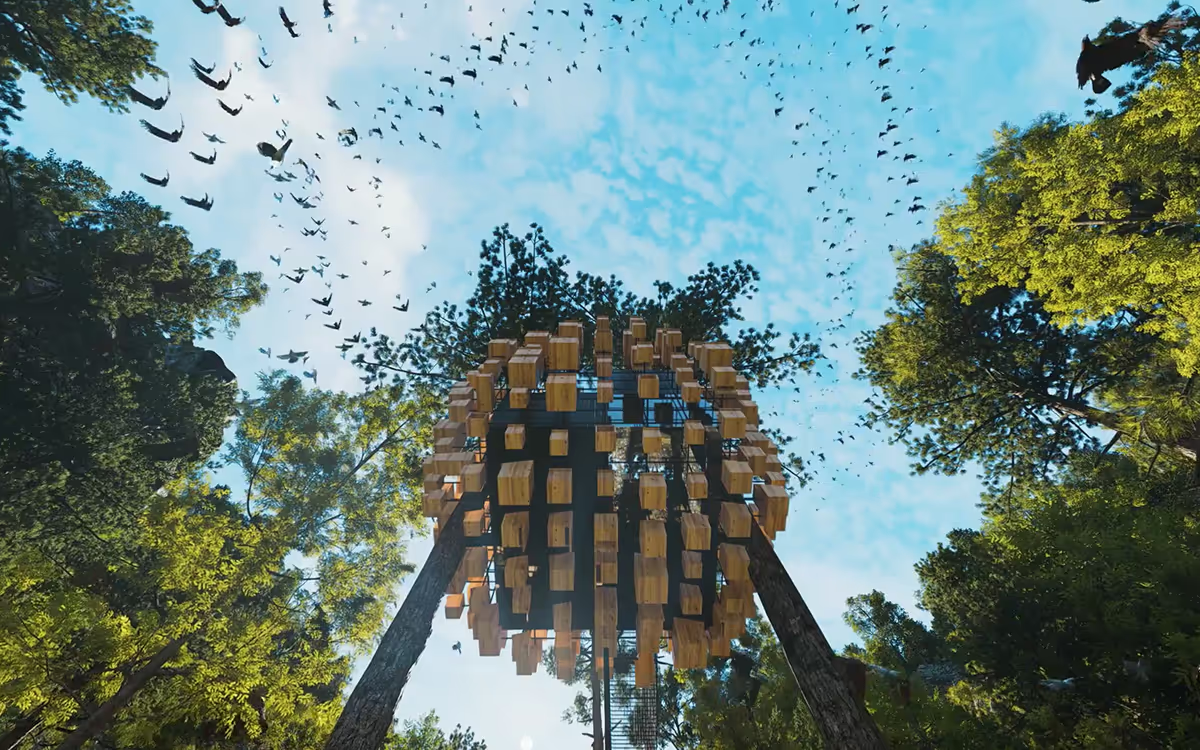
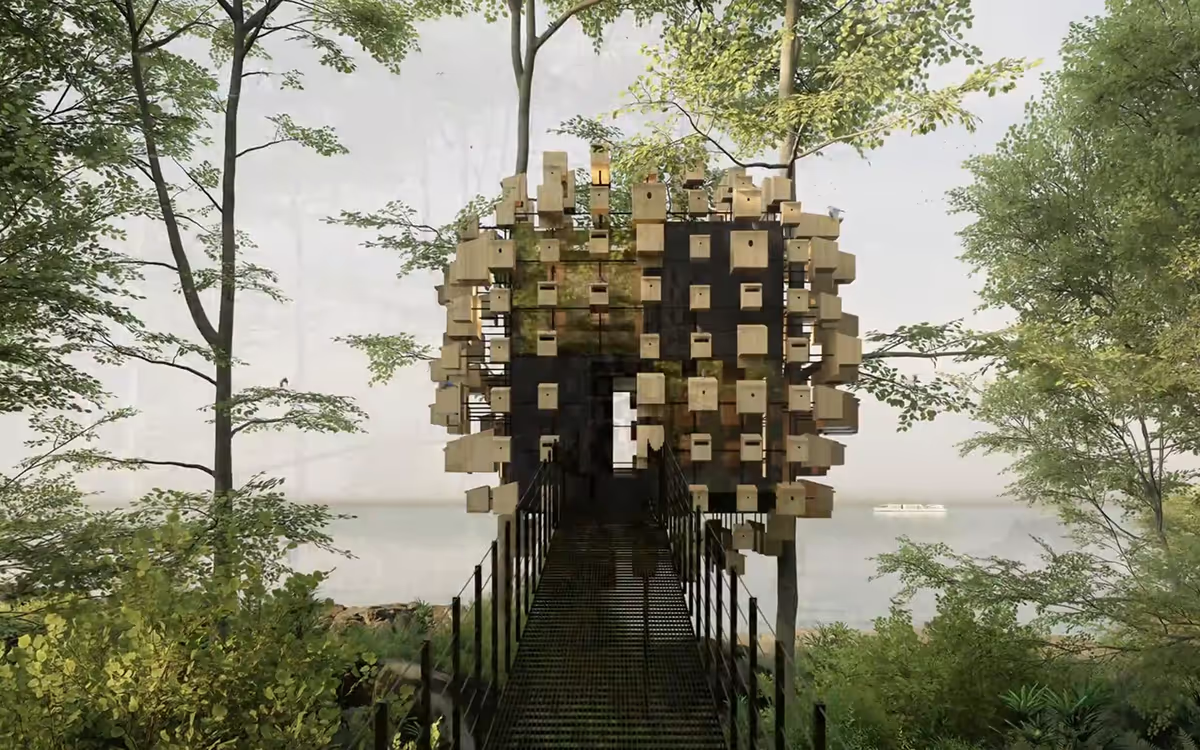
Calling Home explores the relationship between humans, architecture, and the natural world through a quiet and symbolic narrative. The film begins with a solitary man navigating a boat through a secluded canyon, establishing an environment defined by isolation and stillness. As he approaches the house, the architecture is presented as shelter, a place of permanence, and an ecological gesture.
The man’s arrival is intentionally simple and respectful. Upon reaching the terrace, he whistles as a calling gesture, inviting birds to gradually return to their habitat. As they gather, they eventually form a spiraling movement around the house, symbolizing restoration, coexistence, and the idea of architecture acting as a mediator between human presence and wildlife habitat.
The surrounding environment was designed to heighten the sense of distance and discovery, incorporating dense forest landscapes, reflective water surfaces, waterfalls, and elevated cloud-level perspectives. These elements reinforce the scale of the setting and the emotional atmosphere of a transformative journey.
The project reflects a hopeful vision of design as a tool for reconnecting with nature.


Lorenzo Guastaferro
Italy / Naples
In an era marked by the increasing frequency of wildfires and the fragility of natural ecosystems, this video reflects on architecture’s potential as a catalyst for environmental rebirth. The landscapes depicted, while dotted with snowflakes, can also be marked by sparks of fire: two contrasting forces illustrating the delicate balance of nature and the vulnerability of life. The BIG Biosphere is not shown as a mere architectural object, but as a starting point from which life can reemerge. Even amid destruction, its presence suggests the possibility of renewal: a minimal yet powerful site from which the ecosystem can slowly regenerate and be reinhabited. Architecture here becomes a responsible, active gesture, establishing a renewed relationship between the built and the natural environment. It is not a definitive solution to the environmental crisis, but a first, silent, and necessary act, from which the biosphere may begin anew.


Paulo Duc
Vietnam
“The Utopian Distance” was born from a transformative moment when Bjarke Ingels stood one meter from a small bird inside the Treehotel. This silent encounter inspired a fundamental question: how can architecture achieve maximum proximity to nature while preserving its fragile, untamed essence?
The project explores the core of “the utopian distance”—a conceptual threshold where humans are separated from wilderness by a single sheet of glass. This invisible frontier allows us to witness and hear nature’s rhythms without disturbing its inherent peace. It is not about domination, but coexistence—an architecture of restraint, clarity, and respect.
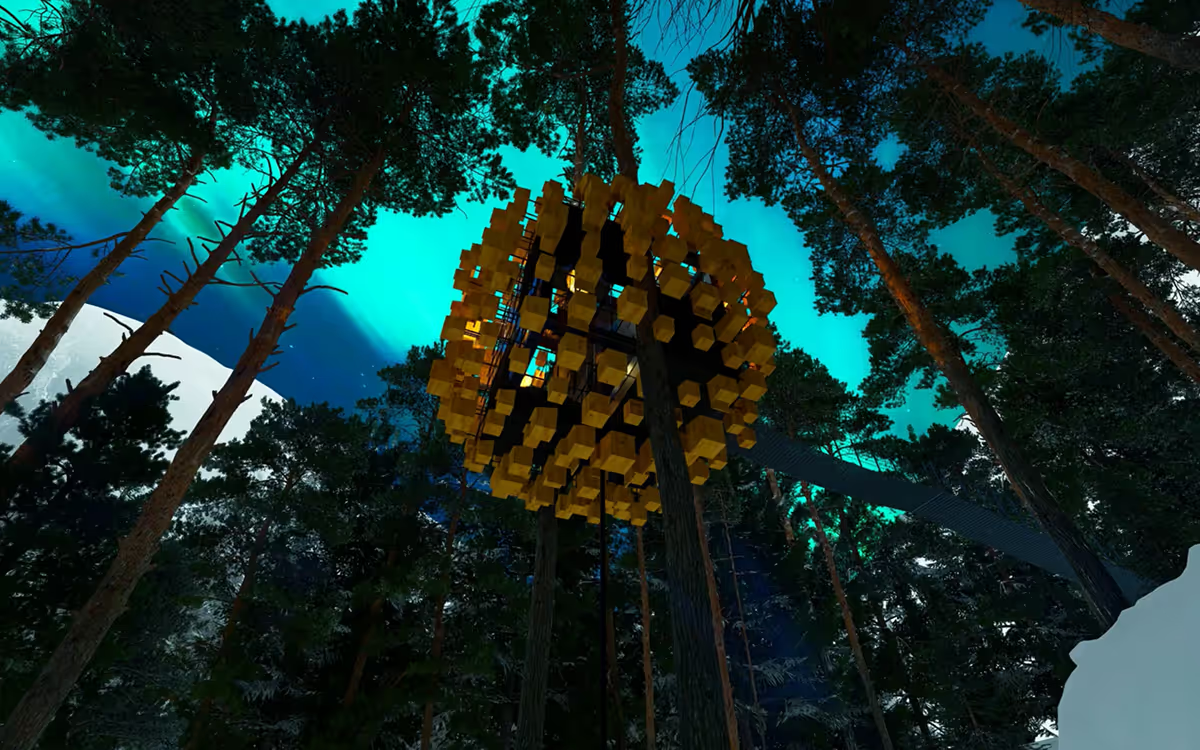
Set against the majestic fjords of Norway, the project recreates sheer vertical cliffs and the ethereal motion of the Aurora Borealis through Cesium and multimedia mapping in D5 Render. Despite hardware limitations on an RTX 3060, the visual immersion remains fluid, atmospheric, and convincing.
Ultimately, Biosphere is more than a luxury retreat; it is a sanctuary for wildlife—a living testament to the “Yes is More” philosophy, and a personal vision of architecture at its most poetic and responsible.


Steven Evan Nugroho
Semarang, Indonesia
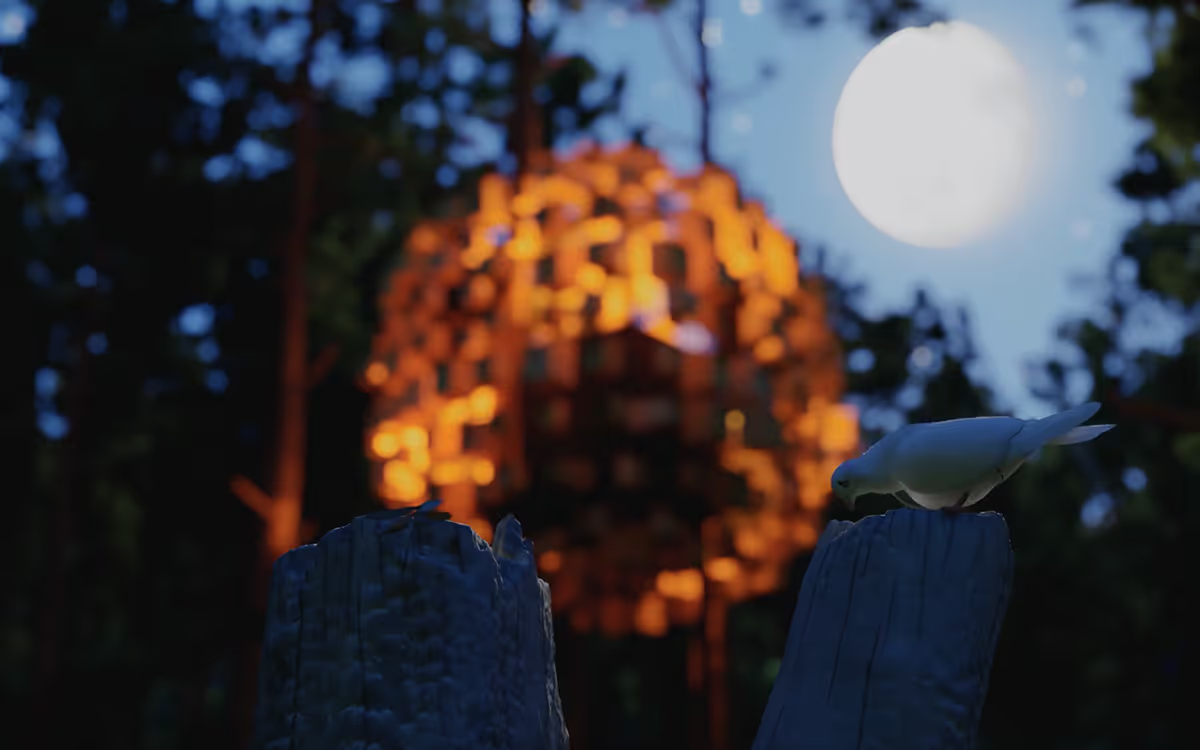
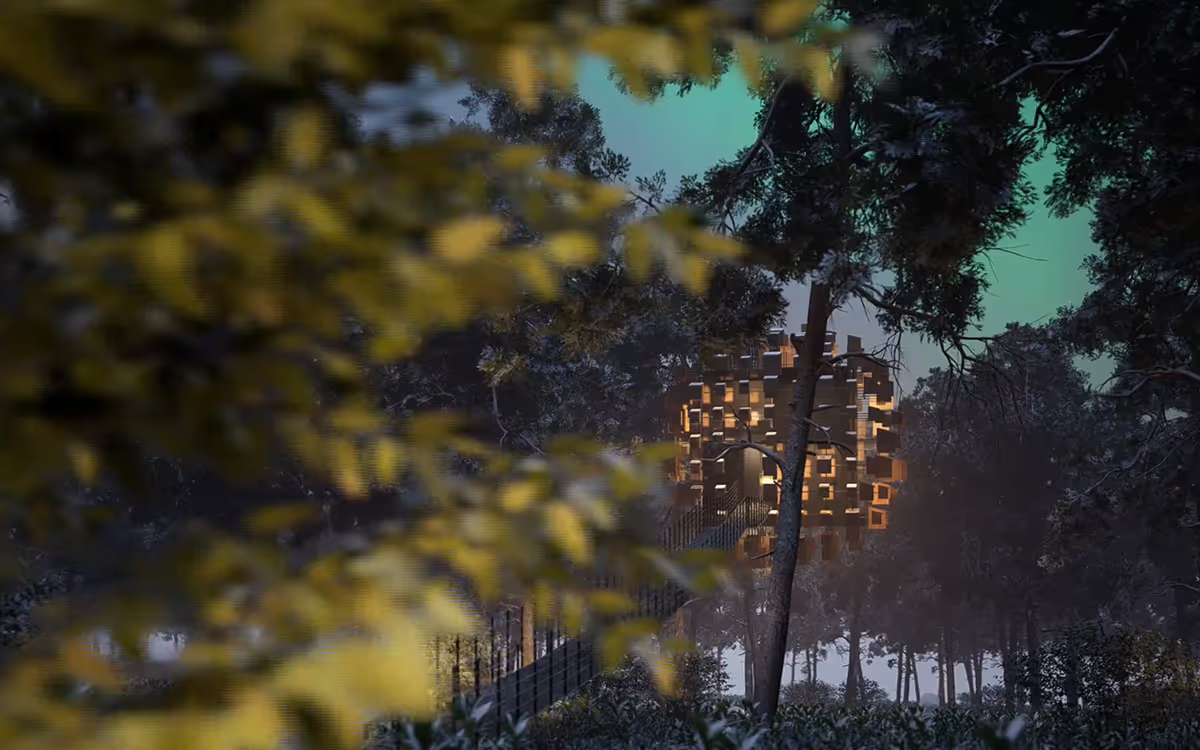
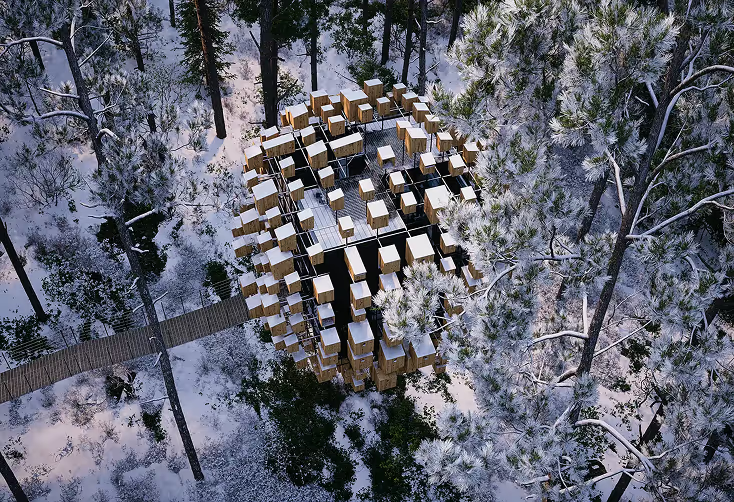
In the deep silence of a frozen winter forest, warmth is the most precious resource. This submission imagines the BIG Birdhouse as a glowing heart suspended in the cold, offering a vital refuge amidst the snow-covered pines. Under the dancing light of the aurora borealis, we witness a small bird returning to the safety of this modular hive.
Using D5 Render’s atmospheric tools, the biting chill of the winter air is contrasted against the inviting, amber glow of the wooden structure. The geometry of the birdhouse remains pure and unaltered, allowing the environment to tell the story. This is a visualization of harmony, showing how architecture can gently coexist with the wild, providing a timeless shelter when the nights are at their longest.

Arch D'Clo

Indonesia
This video reimagines the iconic "Biosphere", originally designed for the Swedish pines, and transplants it into the heart of the Indonesian tropical rainforest—the world's third-largest. In the past, Indonesia was home to the world’s second-largest. However, severe deforestation has significantly diminished its reach. This environmental decline has led to a critical loss of natural habitats, leaving countless bird species struggling to find refuge within a shrinking canopy.
Reflecting a genuine intention to reverse the decline in bird populations, this Birdhouse emerges as an architectural response. By cladding the facade with hundreds of timber nesting boxes, the building becomes a living sanctuary. These wooden boxes serve as new habitats for exotic bird species in Indonesia, specifivally the endangered Cendrawasih (Birds of Paradise).
if realized in indonesia, this would be more than a treehotel, it would be stands as a landmark of hope—proving that architecture can actively repair an ecosystem. It is a vision where design and empathy converge, bowing to the laws of nature rather than defying them. By turning a "birdhouse" into a profound statement on conservation. We learn to dwell not as masters, but as humble guests in a shared, thriving home.


Harfiansyah
Indonesia
A visual journey that captures the atmosphere, details and character of space in one story series.
Every angle is captured with subtle camera movements, showing how light, shadow and texture blend together to form a powerful atmosphere. From the overall view to the small details that are often overlooked, everything is put together to provide an experience that feels real and close.
Concept
The concept raised focuses on how space can build experiences. Design is not only seen as a physical form, but as an emotional journey felt through movement, lighting and transitions between areas.
Environment
The environment is designed to be responsive to the surrounding context, utilizing natural light, openings and landscape elements to create a harmonious relationship between the building and its surroundings. The atmosphere presented feels calm, modern and open.
Creative Intent
Through this video, we want to convey that architecture is not just a beautiful visual, but a living experience. Each frame is designed to invite the viewer to slowly feel the space observe, understand, and enjoy every detail there.


James Callans
USA / Venice Beach, CA
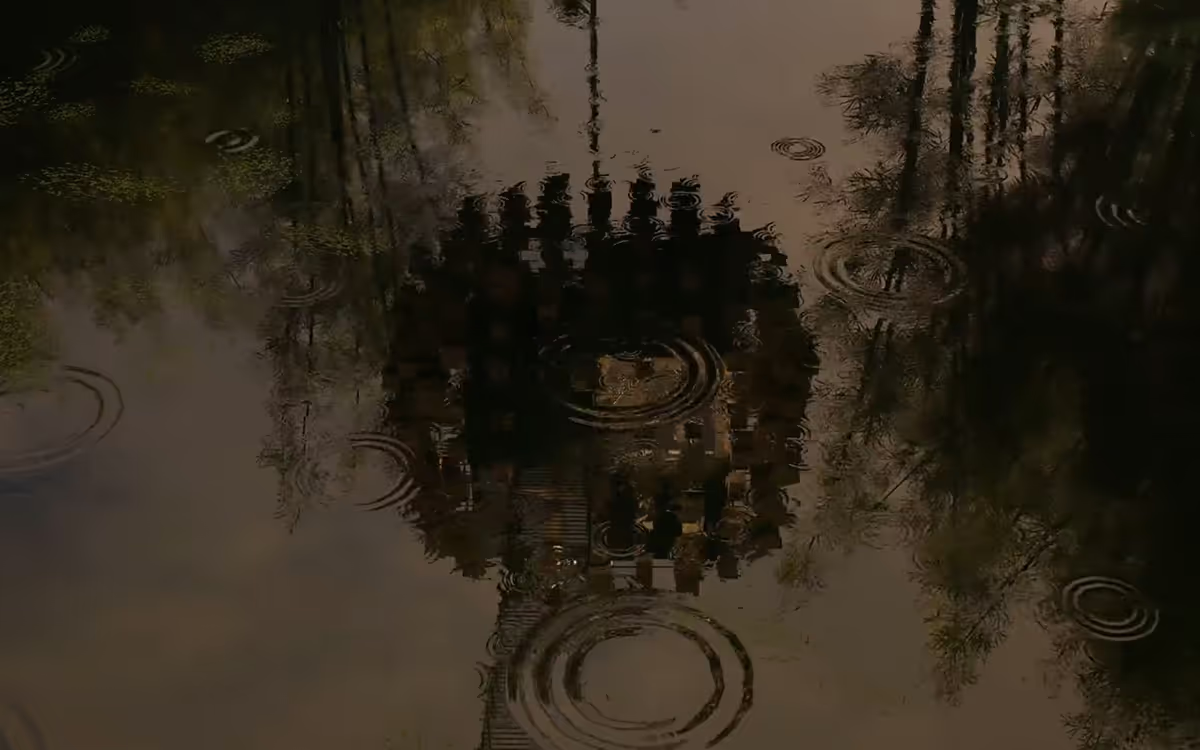
An atmospheric narrative set within a Pacific island bamboo forest, the project is conceived as a temporal journey unfolding over the course of a single day. The setting shifts from a rain-soaked sunrise to a subdued twilight ambience, emphasizing the relationship between light, weather, context, and spatial perception. Rather than focusing singularly on architecture, the work prioritizes experience and connection to place, framing the landscape and its resident birds as active participants in the overall composition. Developed entirely using D5 Render, the project includes a group of small red birds generated with D5’s AI tools and informed by Pacific island fauna. The visuals are paired with a music loop composed in GarageBand alongside royalty-free environmental audio. Created by James Callans, an architecture graduate student at Boston Architectural College.


Adam Hronský
Slovakia
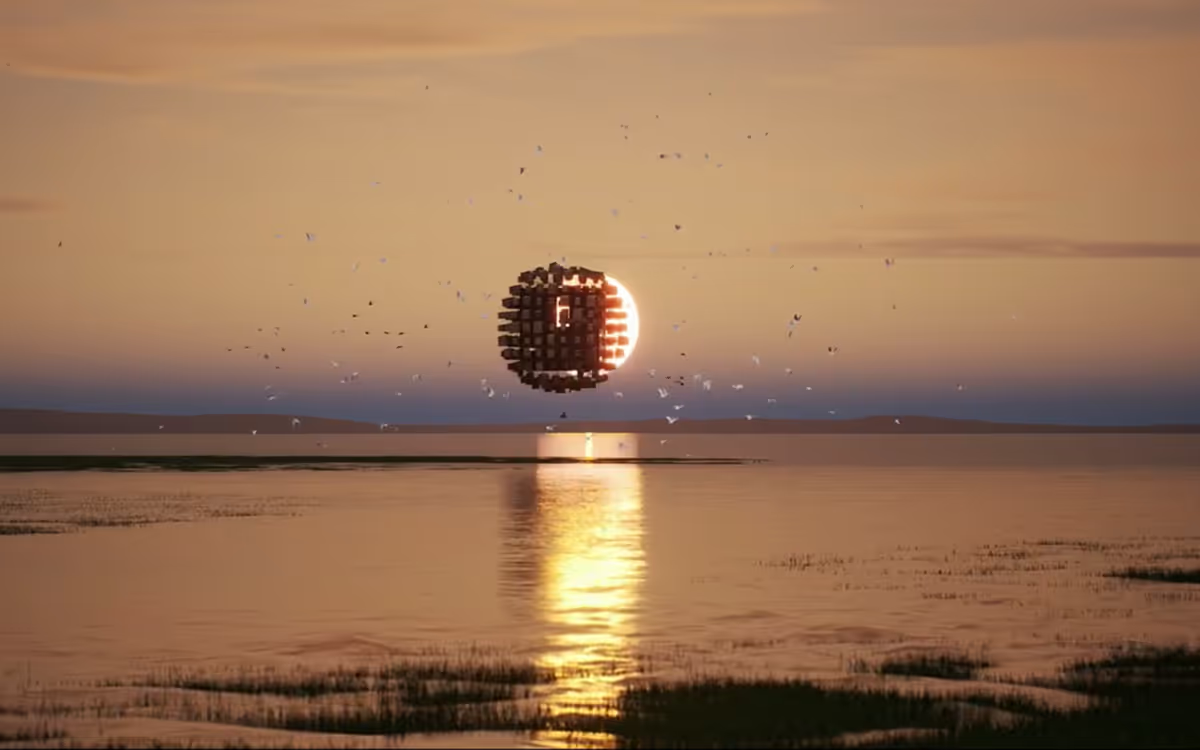
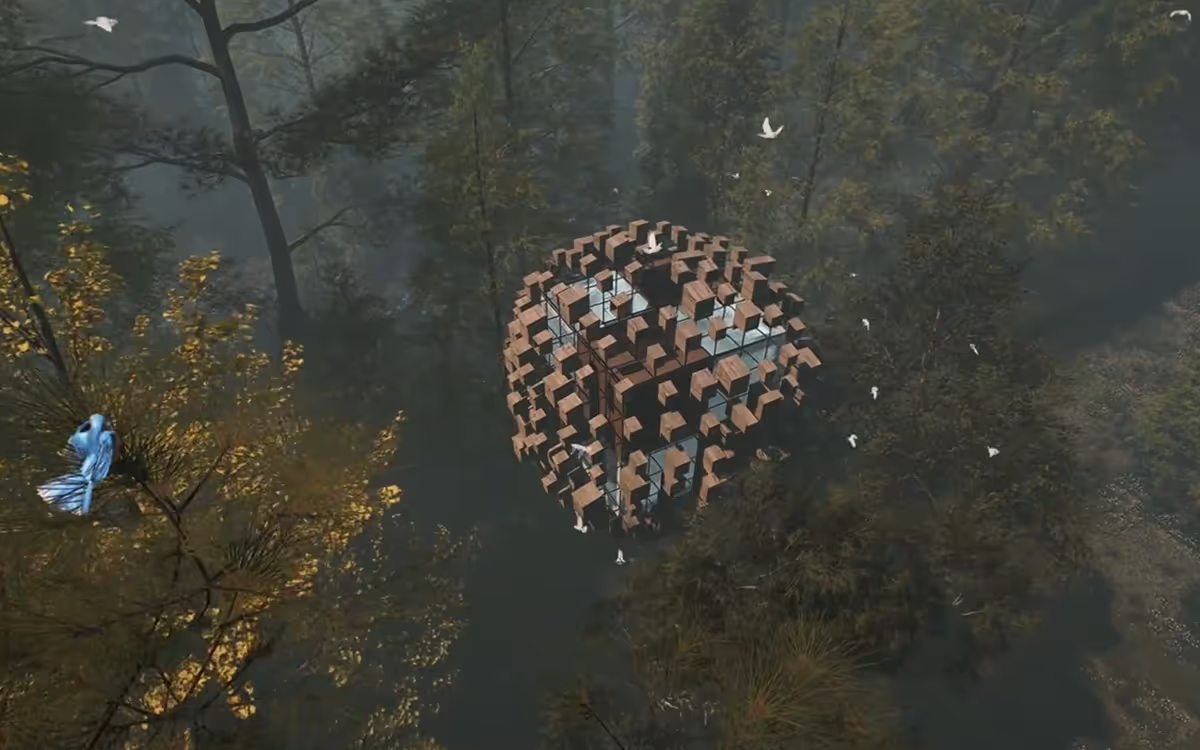
Somewhere along the Mid-Atlantic Ridge, a newly formed volcanic island was discovered. Unexpectedly, it was already inhabited by a dense population of both known and previously undiscovered bird species. For hundreds of years, these species had coexisted, developing unique behaviours and forms of cooperation never observed elsewhere, forming a fragile yet complex ecosystem.
The primary challenge for scientists was how to study this coexistence without disrupting it. Conventional observation methods risked altering the birds’ rituals and social structures.
The solution emerged through a collaboration with architects from the Bjarke Ingels Group. They chose to install their Biosphere treehouses in multiple carefully selected locations. These Biospheres allow scientists to live on the island for extended periods, observing both day and night from within the birds’ environment.
Blending into the landscape, this architectural intervention facilitates uninterrupted research while leaving the ecosystem undisturbed—allowing nature to remain the dominant presence.
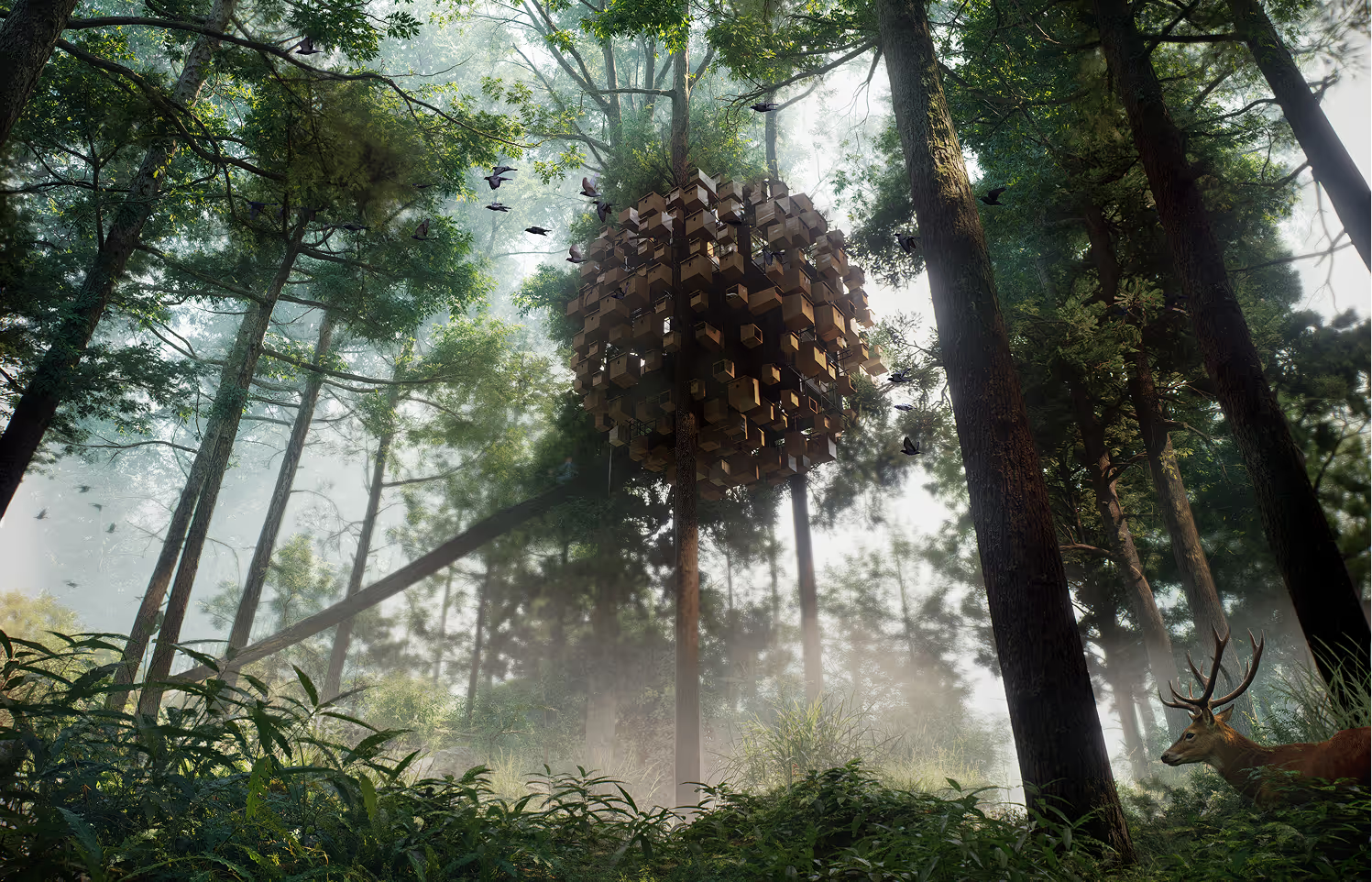
Create a 30-60 second visualisation of the BIG birdhouse, using light, atmosphere and camera to build a clear environment and story.

Open to students, professionals and hobbyists aged 16+, entering solo or in teams, with one submission per person or team.


The ATN x D5 Video Competition invites creators worldwide to produce a 30-60 second visualisation video using D5 Render and the birdhouse model designed by Bjarke Ingels Group (BIG). The competition celebrates creative storytelling, environment design, and rendering quality, with all work produced exclusively inside D5.
Winning entries will be showcased at the ATN Summit 2026 and featured across ATN and D5 platforms.
Participants are required to create a video visualisation that:
The birdhouse may be placed in new contexts or landscapes, but the original design must remain clearly identifiable.
All entries must adhere to the following core requirements:
Software Requirements
Video Specifications
Model Requirements
Creative Freedom (within D5)
Finalists must provide:
Participants will be provided with:
These are supplied via the downloadable competition brief.
A complete submission must be uploaded via the official ATN submission form and must include:
The brief also requires participants to provide scene screenshots and rendering settings as part of production verification.
The competition is open to:
Each person or team may submit one entry only.


See you In:
10
Days
10
Hours
10
Mins
10
Secs